
Rationale of Study on Shiva

Beyond Borders:

Shiva Beyond Borders: The Cross-Cultural Evolution of Proto-Shaivism – A Comparative Study of Philosophy, Symbolism, and Global Traditions

Why was this book written, and why is it relevant?
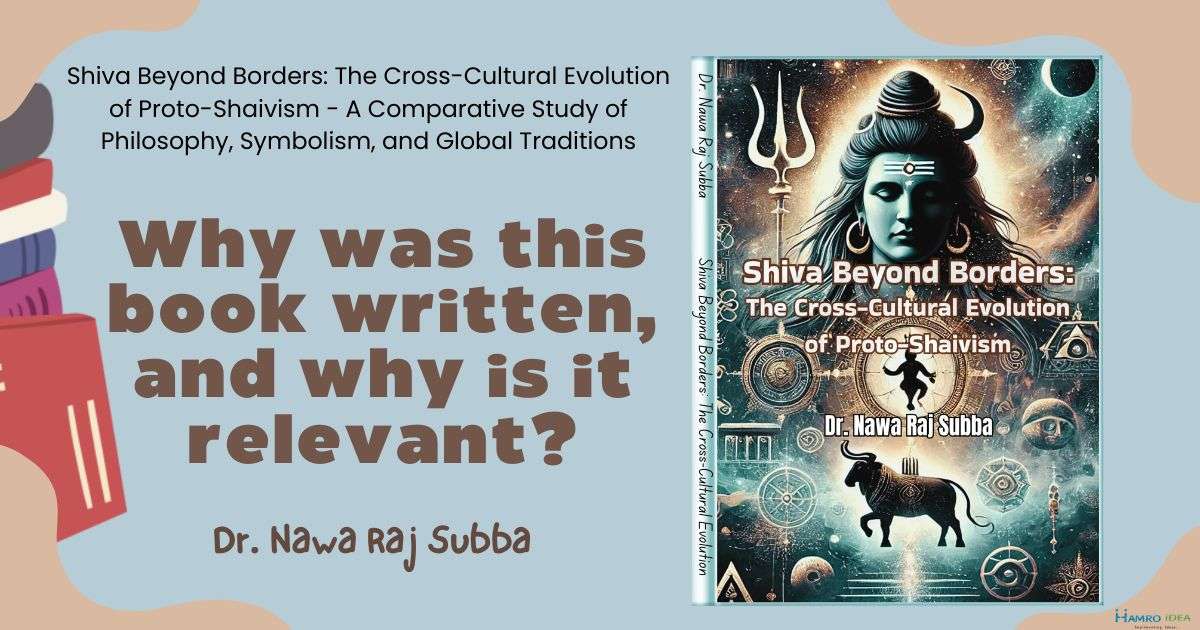
Dr Nawa Raj Subba

Modern society sometimes limits religious and cultural discourses from regional perspectives. Still, a basic question has long driven me: “Is any religious concept really limited to a single geography or civilisation?” This question inspired me to investigate “Shiva”.

Philosophy

Shiva is a powerful idea, a portrayal of consciousness, not only a Hindu and Kirat god. Under many names and symbols, Shiva’s shapes, symbols, and ideas show up across many civilisations. While, in fact, Shiva’s traits span ancient Africa, Egypt, Mesopotamia, the Levant, and the Indus-Harappan civilisations, our knowledge of him has stayed limited within the Vedic and Puranic systems.

The primary goal of writing this book was to contribute to the restoration of Shiva’s standing as a type of “global cultural consciousness”. In this article, I have compared several civilisations, their symbols, archaeological data, rituals, gods, and the practices of yoga and meditation. By means of this, I hope to expose Shaiva philosophy’s strong intercultural impact.
This book will mostly help readers in three ways:

Philosophical and Symbolic Depth

Shaiva philosophy addresses more than just ceremonial observance. It reflects yoga, meditation, the triadic dynamic philosophy, and cosmic energy and awareness structure.
Evidence-Based Historical Enquiry: This work is based on real evidence, not mere speculation. From the Harappan seal to the Egyptian deity Min, the book provides a thorough comparative viewpoint for more research, including the Sumerian god Enki.

Modern Relevance

Shaiva philosophy can provide a road towards peace in the debate over religious pluralism nowadays. Knowing the global archetype of Shiva can help us determine the common connections among many religious systems.

I firmly believe that religions serve as many representations of a shared memory rather than being fundamentally in conflict. This book aims to assist readers in gaining that understanding.

Final Thought

Finally, academics, cultural historians, philosophical philosophers, symbolists, and those looking for coherence among spiritual traditions will locate great value in this work.
I provide my work to you all with regard for readers’ natural curiosity.
शिव सीमाभन्दा पर: प्रोटो-शैववादको विश्वव्यापी यात्रा

Publications

Thuprai

Similar Posts

  • Traditional Practices on Mother and Child Health Care in Rajbanshi Community of Nepal

    Citation: Nawa Raj Subba. Traditional Practices on Mother and Child Health Care in Rajbanshi Community of Nepal. American Journal of Health Research. Vol. 3, No. 5, 2015, pp. 310-317. doi: 10.11648/j.ajhr.20150305.18, Correspondence: Nawa Raj Subba. Email address: [email protected] Abstract This is a qualitative study on traditional health care of mother and child in Rajbanshi community…

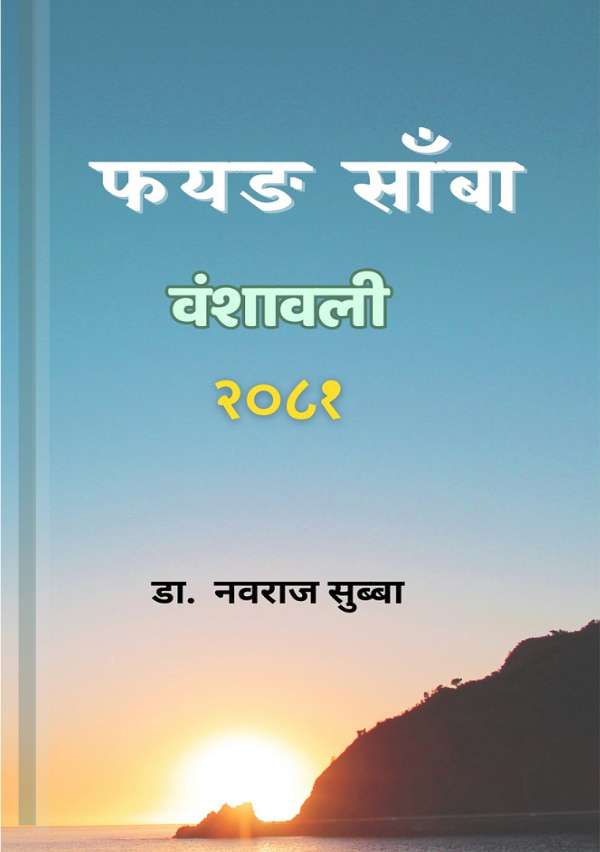
  • वंशावली-२०८१

    डा. नवराज सुब्बा वंशावली-२०८१: हाम्रो इतिहास र पहिचानको दस्तावेज वंशावली भनेको केवल नामहरूको सूची होइन, यो हाम्रो जरा र इतिहासको ऐतिहासिक दस्तावेज हो। वंशावली-२०८१ ले हाम्रो परिवार र समुदायलाई केवल जोड्ने मात्र होइन, हाम्रो जातीय इतिहास र पहिचानलाई राष्ट्रिय परिप्रेक्ष्यमा प्रस्तुत गर्ने महत्त्वपूर्ण माध्यम बनेको छ। यस लेखमा, वंशावली-२०८१ कसरी तयार भयो, यसले हाम्रो इतिहासलाई…

  • From Ningwafu to Shiva:

    Transformation of Kirat Deity in Lichchavi-era Nepal Dr. Nawa Raj Subba Abstract Re-examining the Transformation of Ningwafu into Shiva: Uncovering the Indigenous Roots of the Pashupatinath Temple This study critically re-evaluates how Ningwafu, the primary nature deity of the indigenous Kirat community, was gradually transformed into the Hindu god Shiva (Pashupatinath) during the Lichchhavi period…

  • चिन्ता के हो?

    डा. नवराज सुब्बा परिचय चिन्ता भनेको तनाव आउँदा शरीरले दिने स्वाभाविक प्रतिक्रिया हो। जीवनमा कुनै न कुनै समयमा सबैले यसलाई महसुस गर्छन्।  चिन्ता केवल सामान्य सोचाइ मात्र होइन। यो शरीरले खतरा वा जोखिम महसुस गर्दा देखाउने प्रतिक्रिया हो। कहिलेकाहीँ वास्तविक भन्दा बढी डर लाग्छ। यो हाम्रो शरीरको सुरक्षा गर्ने तरिका जस्तै हो। पृष्ठभूमि पहिलेका दिनमा…

  • Kirat Rai, Limbu are somewhat perplexed by the vast array of ethnic identities

    Dr. Nawa Raj Subba Many people are confused about whether Rai and Limbu are the same or not. A scholarly debate about the distinction between ethnic identities is required. It’s not just a matter of Rai and Limbu. This is just an example. Politics, geography, language, and culture all play a role in ethnic formation…

  • Outlook of Research Articles

    Nawa Raj Subba, Managing Hepatitis Outbreak in Biratnagar Nepal, Science Journal of Public Health. Vol. 3, No. 6, 2015, pp. 808-814. doi: 10.11648/j.sjph.20150306.12 Preview Nawa Raj Subba, Suicides in Ilam District of Nepal, American Journal of Applied Psychology. Vol. 4, No. 6, 2015, pp. 137-141. doi: 10.11648/j.ajap.20150406.11.  Preview Nawa Raj Subba. Traditional Practices on Mother…