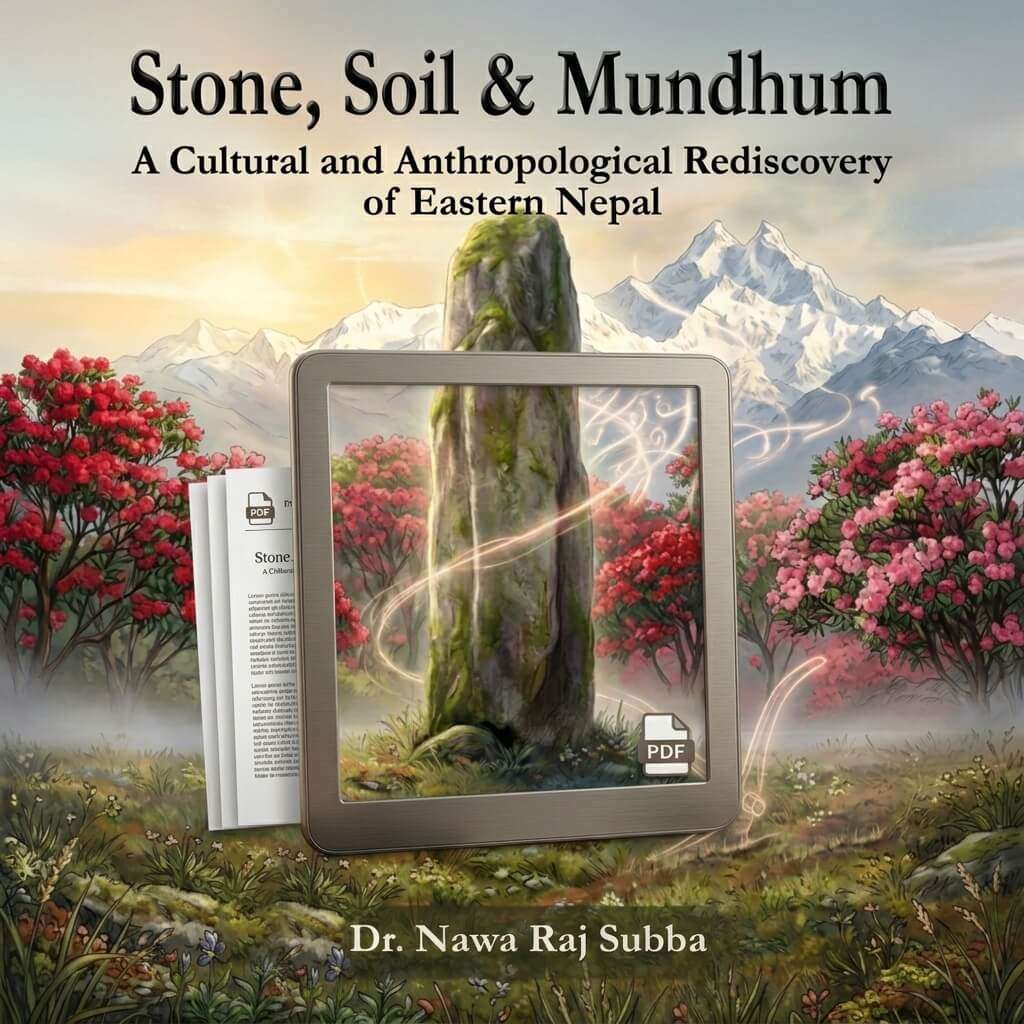
Stone, Soil and Mundhum
Cultural and anthropological rediscovery of eastern Nepal
The Stone, Soil and Mundhum unearths Eastern Nepal’s forgotten past. This anthropological study explores the region’s stone, soil, and indigenous roots. Historically, Kathmandu’s dominant narrative buried these local stories.
Dr. Nawa Raj Subba discusses the region from Madhes to the Himalayas in historical, linguistic, social anthropological, archaeological, ecological and contemporary genetic light. The book poses questions about the connection between Indigenous identity, land, culture, religion and political history.
Chotlung
The book discusses the significance of Chotlung, the religious and cultural strata and chambers of Halesi (Halesung) and the potential cultural linkages between plains and hills. Also, it introduces the history of the Kipat system, the ecological relationship between humans and land, political anthropology and the evolution of Kirat identity in the diaspora.
One of the book’s main themes is that Madhes and the hills have never been distinct cultural worlds. Linguistic, cultural, and historical evidence suggests older connections. Conventional narratives often ignore much of this evidence.
Diaspora
The book also relates Chotlung philosophy to the experience of young people living away from home in the cities of London and Hong Kong. We cannot treat indigenous knowledge merely as a historical document. Reading of the essays can grow the sense of belonging and cultural grounding in a rapidly changing world.
Stone, Soil and Mundhum is, thus, an investigation into Eastern Nepal and an examination of identity, nature, history and contemporary life. It encourages readers to see Nepal from the East, where many of Nepal’s older cultural memories are still alive.