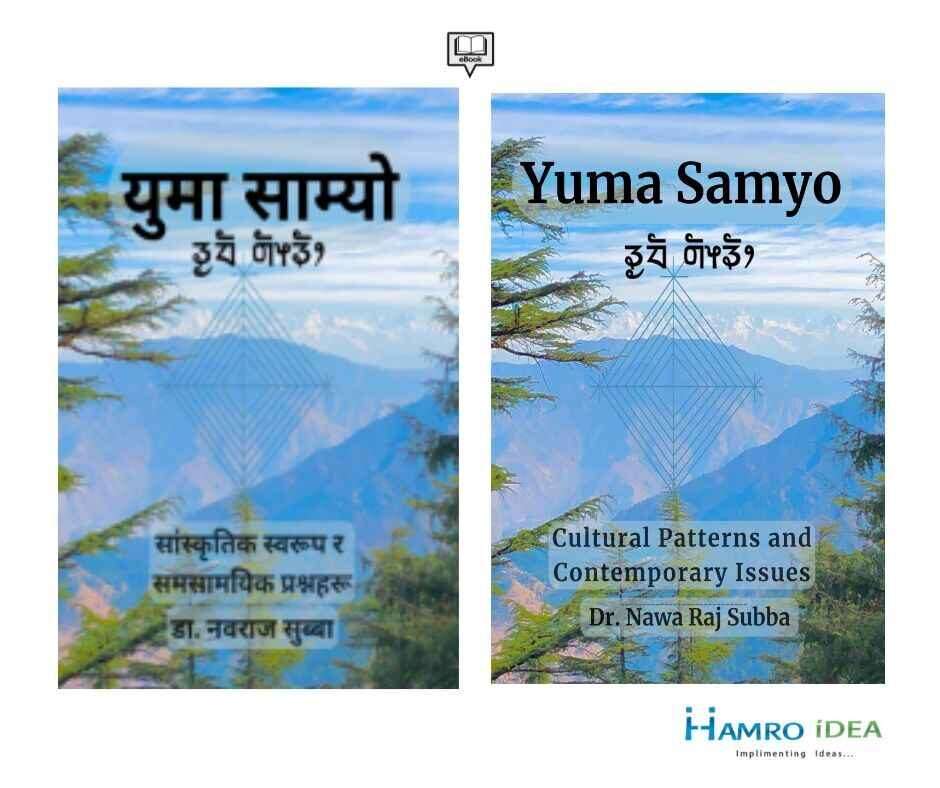
Yuma Samyo
Yuma Samyo: Cultural Patterns and Contemporary Issues
Introduction
The book critically evaluates not only the religious philosophy of Yuma religion, but also its social, political, and cultural implications.
Essentially, this book is not a limited religious text, but rather an analysis of a lived experience and indigenous religion-consciousness—where ‘originality’ is struggling not only in the past but also in the contemporary context.
What is the purpose of the book?
This book “Yuma Samyo: Faith, identity and Challenges of the Limbu People” is an attempt to understand today’s social, cultural, and political role of Yuma religion. Yuma Samyo (Yumaism) has emerged as a religious revival in the Limbu community, but its meaning and form are not the same for everyone. In other words, different groups of people now have diverse ideas of Yuma faith. One of the goals of this book is to look at it and show it.
For some, it is a restoration of indigenous original religions, while for others it is an ‘institutional religion’ with a mixture of external influences (such as Hindu or Christian influence). Thus, the book examines these differing viewpoints objectively and critically analyzes them.
What–what topics are covered?
History and Philosophy – Where are the roots of Yuma Samyo? What is the concept of mundhum, soul, rebirth, nature worship?
Conflict with the Phedang or Samba Yeba/Yuma (Shamani) tradition – Yuma Samyo is now becoming a formal religion by building religious buildings such as “Manghim”. But in the old Phedang, Yebas consider the Shamani method based on oral tradition to be the ‘true’ Limbu religion. There is an ideological tension between the two.
Hindu and Christian influence – Some parts of Yuma religion are similar to Hinduism, such as the form of gods and goddesses or methods of worship. Similarly, there are similarities in the structure of the organization seen in Christianity, the method of religious instruction, the special dress, and the style of preaching. How might these similarities have affected the original nature of Yuma religion? Has it strengthened or weakened its identity? It has become a matter of discussion.
Socio-political influence – Yuma religion is not limited to religious issues, it has also affected the movement for social structure, mother tongue rights, and cultural identity of the Limbu community. How has it contributed to organizing communities, raising their voices for rights, and raising cultural pride? What are the successful examples of this? This is also discussed here.